When it comes to keeping kids entertained, nothing beats the great outdoors. Forget the screens and let imagination run wild! Outdoor games not only spark creativity but also sneak in a dose of exercise that even the most reluctant little ones can’t resist.
Imagine the laughter echoing through the park as kids race in a game of tag or strategize their next move in capture the flag. These games are more than just fun; they’re a recipe for lifelong memories and friendships. Plus, they’ll tire out those energetic bundles of joy, giving parents a much-needed break.
Benefits Of Outdoor Kids Games
Outdoor games provide numerous advantages for children’s development, emphasizing both physical and mental well-being. Participants engage in various activities, enhancing their overall health and happiness.
Physical Health Benefits
Engaging in outdoor games promotes cardiovascular health through active play. Children develop muscle strength, flexibility, and coordination while playing games such as soccer or tag. Physical activity also supports weight management, reducing the risk of obesity. Research indicates that outdoor play contributes to better bone health, benefiting long-term growth. Kids experience increased stamina, enabling them to partake in more vigorous activities. Regular exposure to sunlight during outdoor games aids vitamin D synthesis, which is essential for bone health.
Mental Health Benefits
Participating in outdoor games significantly boosts mental health. Children gain confidence by mastering new skills during these activities. Social interactions in a playful environment foster communication and teamwork, promoting strong relationships among peers. Research shows outdoor play reduces anxiety and stress, enhancing overall mood. Engaging with nature during these games can stimulate creativity and imagination. Outdoor activities also encourage problem-solving skills as children navigate challenges in games, cultivating resilience and adaptability.
Popular Outdoor Kids Games
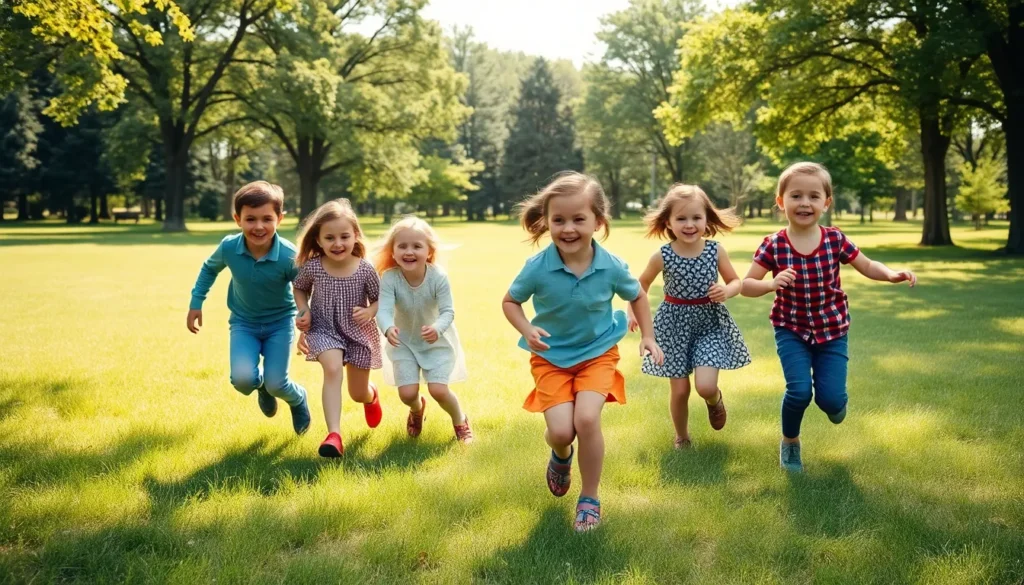
Outdoor games appeal to children of all ages, fostering teamwork and physical skills. Different types of games create diverse experiences that enhance playtime and social interactions.
Traditional Games
Traditional games include classic activities like tag, hide and seek, and capture the flag. Tag promotes agility as children chase each other, while hide and seek encourages strategy and patience. Capture the flag combines elements of teamwork and competition, requiring players to coordinate efforts to retrieve an opposing team’s flag. These games are often played in backyards or local parks, allowing for spontaneous fun and lasting friendships.
Modern Games
Modern games incorporate technology alongside physical activity. Popular choices include outdoor laser tag and drone racing. Laser tag combines strategy and fitness as children navigate obstacle courses to tag opponents. Drone racing promotes hand-eye coordination, with children piloting drones through outdoor courses. These games blend traditional principles with contemporary elements, attracting kids with their innovative appeal while still emphasizing outdoor engagement.
Tips For Organizing Outdoor Kids Games
Organizing outdoor games for kids requires careful planning to ensure fun and safety. Consider the following tips for a successful event.
Safety Considerations
Safety remains a top priority when planning outdoor games. Choose a suitable area free of hazards like sharp objects or dangerous plants. Check the weather forecast to avoid rain or extreme temperatures, ensuring comfort during play. Supervise children at all times to prevent accidents and ensure everyone participates. First-aid supplies should always be accessible, ready for minor injuries. Communicating safety rules before the games begin helps set clear expectations for behavior, thereby promoting a safe environment.
Choosing the Right Location
Selecting the right location significantly impacts the experience. Fields, parks, or large backyards offer ample space for movement and activities. Ensure the ground is even and free of obstacles, making it safer for energetic play. Proximity to restrooms and water sources adds convenience for adults and can help maintain hydration. Shaded areas benefit kids needing breaks from the sun, enhancing comfort during warmer months. Evaluate accessibility for all participants, including kids with special needs, ensuring everyone has the opportunity to enjoy the games.
How To Engage Kids In Outdoor Games
Engaging kids in outdoor games requires creativity and enthusiasm. Strategies that foster collaboration and enjoyment create an inviting atmosphere for participation.
Encouraging Teamwork
Teamwork enhances social skills and camaraderie among children. Organizing relay races or cooperative games like capture the flag encourages collaboration. Assigning roles within teams helps participants feel included and valued. Kids who work together develop a sense of unity and belonging. Adults can encourage communication by prompting children to discuss strategies and share leadership roles. Observing their interactions fosters problem-solving skills and adaptability. This nurturing environment promotes friendships and strengthens their ability to work as part of a group.
Making It Fun
Fun is the core of outdoor games. Incorporating themes or challenges sparks excitement and motivates kids to join in. For example, themed scavenger hunts can inspire creativity while encouraging physical activity. Adding music or prizes enhances the experience without detracting from the game’s spirit. Using colorful equipment or props captures interest and adds a visual element that kids love. Involving children in game selection empowers them and increases engagement. Allowing for spontaneous changes during gameplay keeps things fresh and lively, ensuring enjoyment remains central to the experience.
Embracing outdoor games is essential for children’s development and well-being. These activities not only provide a source of entertainment but also significantly contribute to physical fitness and mental health. By encouraging kids to engage in both traditional and modern games, parents can help foster essential life skills such as teamwork, creativity, and resilience.
Planning outdoor play with safety and enjoyment in mind ensures that children have memorable experiences. With the right approach, parents can create a vibrant environment where kids thrive, make lasting friendships, and enjoy the great outdoors. The benefits of outdoor games extend far beyond mere fun, shaping well-rounded individuals ready to face the world.